

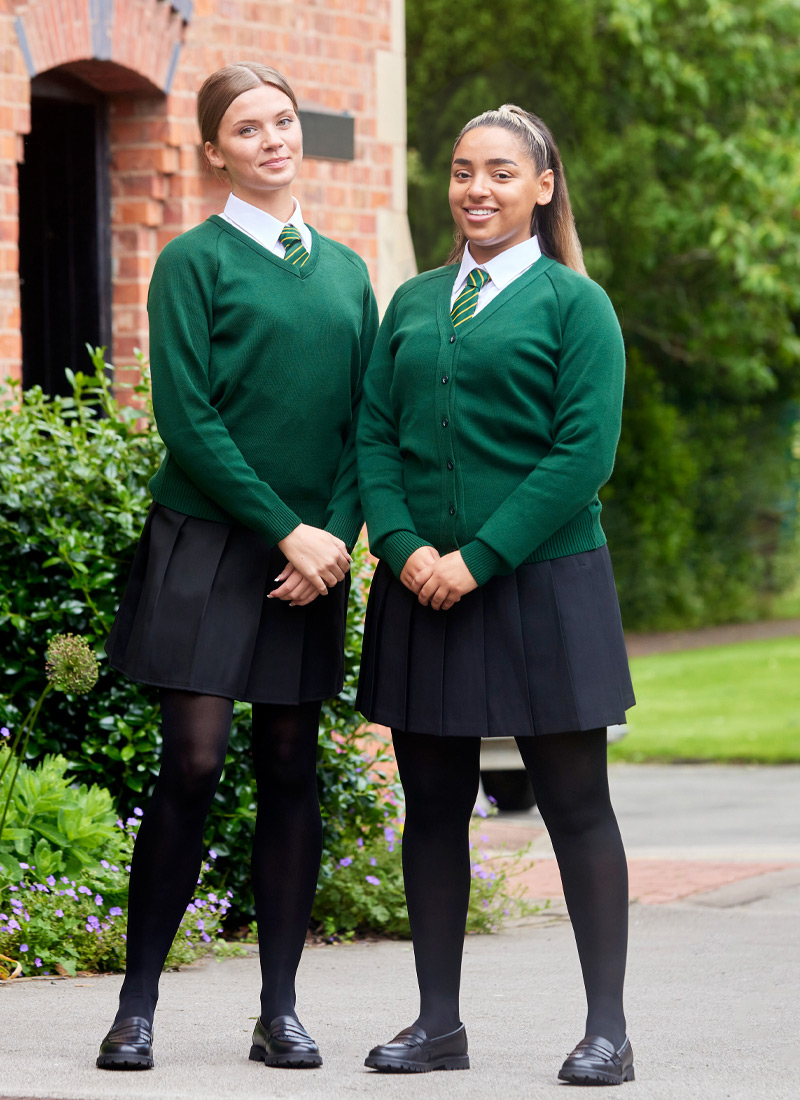
Look Smart, Save Money, Help the Environment
Around 25 percent of a garment’s environmental footprint comes from washing and drying. Small changes in your laundry routine can reduce waste, save money, and keep items such as school uniforms, fancy-dress costumes, workwear and hoodies in better condition for longer. Below are simple, effective ways to care for your clothing at home.
Better garment care means fewer replacements, lower long-term costs, and longer-lasting clothing. It also helps families get more value from items such as schoolwear, fancy-dress outfits for school events, work uniforms, and customised hoodies.
Most of us wash most of our clothes too often. By reducing how often you wash your clothes you’re reducing your garments environmental footprint. It will also save your garment from the wear and tear of a machine cycle, making them look their best for longer. (Socks and underwear should be washed after every use).
Airing in between washes refreshes your clothes and helps cut down on washes. A short stint in the fresh air or even just hung over the back of a chair overnight can make a difference. You could also hang clothes up in the bathroom while you shower; the humid air is extra efficient, and as a bonus will make your clothes look smoother.
Spot cleaning stains between washes will help cut down on machine cycles.
Wash your clothes on 30° will help save energy. Most care labels state the highest temperature a garment can be washed at and not the recommended temperature. Modern detergents are so efficient that your clothes will be just as clean in 30°. If your machine has an eco-setting, choose that.
Before washing turn the garment inside-out. Most washing machine drums pull on garment fibres – causing them to bobble. Turning the garment inside out minimises this effect.
Remove the garment from the washing machine as soon as the wash is finish. Shake it out well and place on a hanger or rack.
Biological washing powders or detergents use enzymes which can break down the colours and fibres of the garment – this in turn reduces the longevity of the garment.
Many people still use a great deal of detergent in their washing machine, whilst machines have become more efficient and use up to 30% less water. Therefore, the concentration of detergent is much higher, which can commonly lead to colour fading.
Fabric conditioner is also known to break down fibres in clothing. Do not use fabric conditioner as many garments are specially coated for easy care and fabric conditioner interferes with this process. Check the washing instructions.
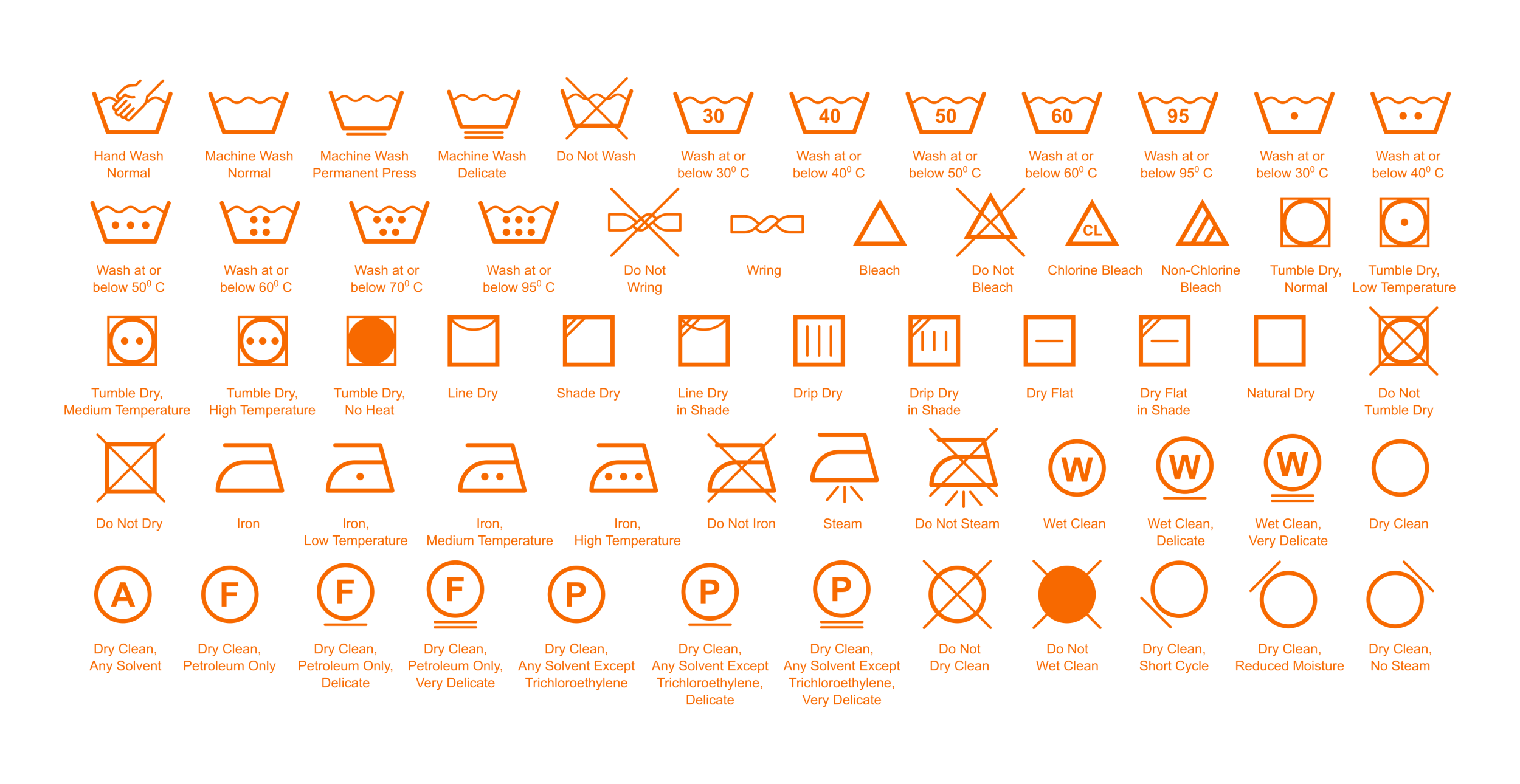
Always follow the manufacturer’s garment care guidelines as many garments are best left to dry naturally. Never tumble dry a pleated garment – always hang up on a suitable hanger to dry (refer to the chart below to understand the different tumble drying symbols).
Acrylic based garments are exceptionally durable and long lasting, however when heat of over 40° is applied to acrylic it results in the garment changing shape, bobbling or even loosing colour. This is most commonly seen when garments have been tumble dried and can cause your garment to wear much quicker than usual.
We do not recommend tumble drying knitwear, sweatshirts or sweatshirt cardigans.
Only iron if you need to. Many school uniform garments are ‘easy care’ and do not need ironing. Make sure your iron is set to the correct temperature as given on the garment care label (refer to the chart below to understand the different ironing symbols). Printed garments should not be ironed over the printed area.
These do not adhere on stretchy fabrics. Only iron on to garments you can iron and remember to put a layer e.g. a handkerchief, between the clothing and the iron to avoid scorch marks.
Never wash a garment with its Velcro fastening unfastened. The material is abrasive and can cause damage to other items of clothing in the wash.
Knitted goods are prone to pilling, some more than others. The main reason is friction or rubbing against another object and this does not necessarily mean that the garment is faulty. Pilling can be caused by any of the following:
- Movement against another fabric or object
- Heat generated by an individual when the garment is worn
- Washing the garment at the wrong temperature and/or with other fabrics that will rub against the garment.
- Tumble drying the garment at too high a temperature. This causes the heat to draw out the fibre. Some garments appear to have ‘fluffed up’ after a short period of wear and this is due to surface fibre from the yarn coming to the surface. The yarn in these cases is slightly hairier than usual and the hairs disappear after a period of wear and washing. If the fibres do not wash away, various devices can be used to remove the excess fibre to enhance the look of the garment. Once the fibre is removed the garment is unlikely to pill again. It is best to turn garments inside out when washing. When pilling occurs, it should settle down after washing a number of times.
Still have a question?